Building a cluster wall
From cabinets of curiosities and ex-voto walls to a wall in your own home — how to compose a cluster of ceramic fragments. Anchor, breathing room, density, growth.
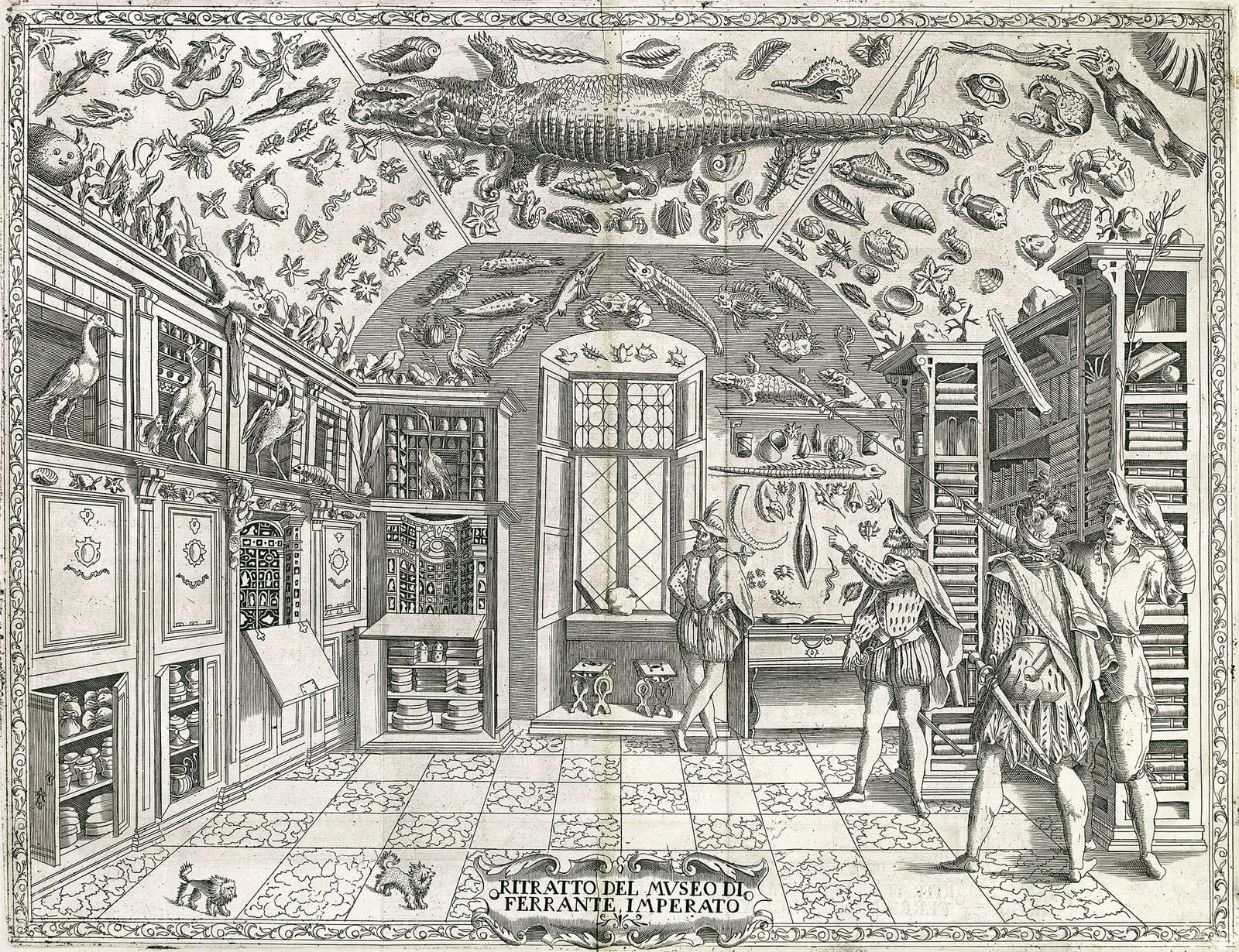
Long before the modern gallery, there were Wunderkammern, ex-voto walls and the collection rooms of churches, palaces and pilgrimage sites. In Europe and Mexico the devout brought small painted panels, plaques and tokens — offerings tied to a vow, a healing, a prayer — and hung them beside earlier contributions, close to a relic or a saint. Across generations the walls grew organically. No curator, no committee. Each object was personal; the cluster became the work.
The Wunderkammern of the 16th and 17th centuries built on the same impulse. German, Austrian and Italian courts filled rooms with fossils, corals, scientific instruments, paintings, masks and exotic objects. No minimalism. No empty white walls. Just density, accumulation, contrast and wonder. A world built from fragments.
CLSTR works from that same logic. Not one central object, but a growing whole made of unique hand-built fragments. A wall that comes into being slowly. A composition that is allowed to shift, expand and breathe.
Starting from colour, form, or contrast?
A CLSTR installation doesn't need to be perfectly symmetrical to feel coherent. Coherence usually comes from rhythm, material and repetition.
Some compositions start from colour:
* entirely dark and volcanic * ivory and white on a light wall * tone-on-tone with the colours of the room
Others start from form:
* vertical growth * loose constellations * dense fields with almost no breathing room
And sometimes the mix is what works: smooth fragments next to rough ones, heavy dark pieces beside light open shapes, gloss against the raw.
As in a Wunderkammer, tension often comes from contrast.
Layouts
Geometric, aligned, or organic — even though GSTRs are round, irregular objects, a composition can still have a clear structure.
Geometric
A geometric installation relies on repetition and regularity. Think of a grid, a vertical line, an almost architectural arrangement.
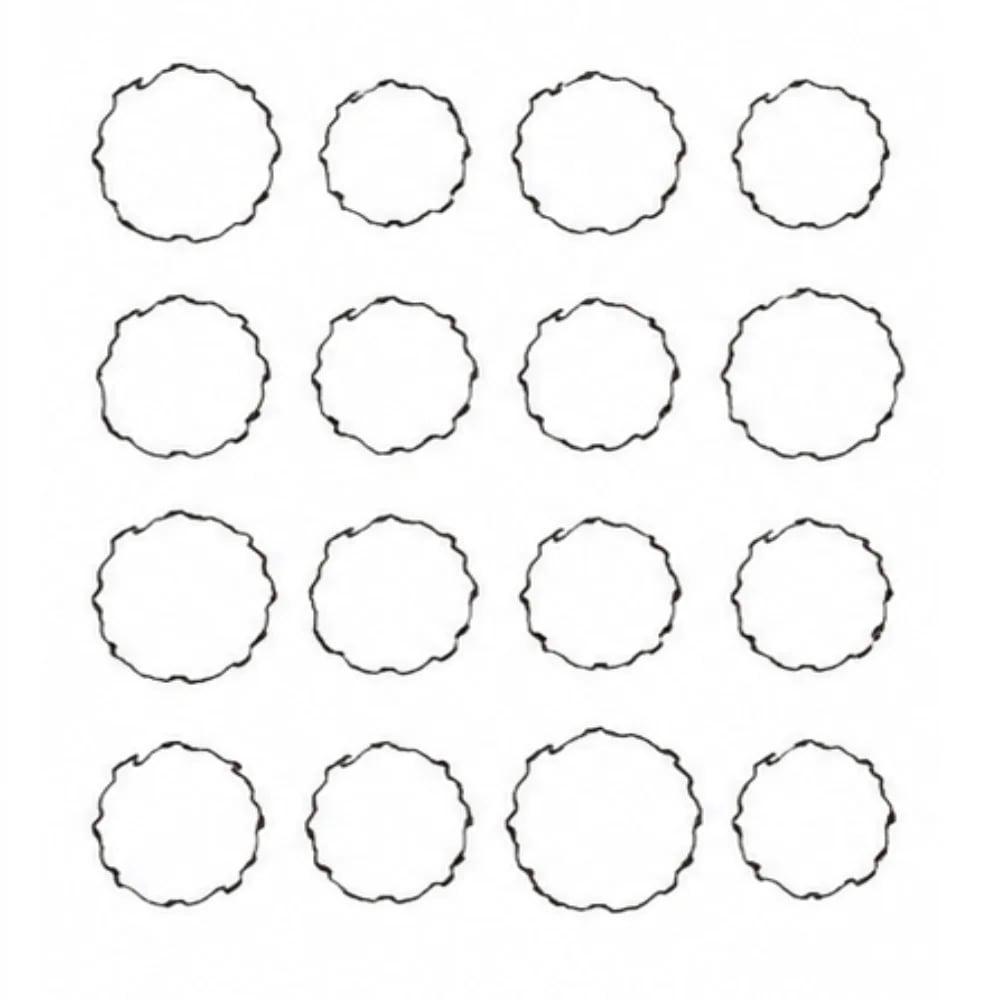
This works particularly well:
* in minimalist interiors * on large white walls * when you want calm in spite of many objects
In CLSTR, geometric doesn't have to mean perfectly straight. Small irregularities keep the result human.
Aligned
In an aligned composition, invisible lines run between the objects.
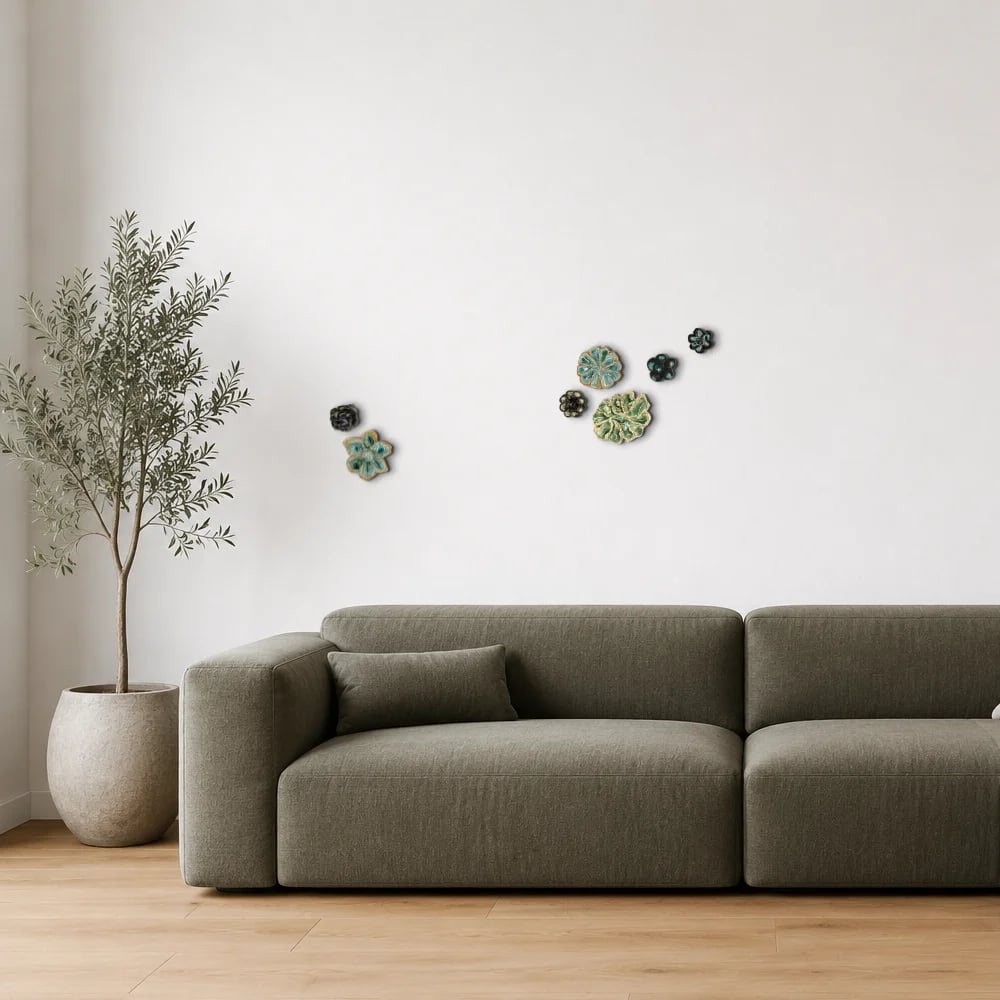
Fragments don't need to be identical, but share a visual axis:
* equal spacing * consistent height alignment * diagonal movement * a central anchor line
The eye travels automatically through the composition.
This kind of installation works well above a sofa, a sideboard, a console or a bed. The piece of furniture acts as visual weight beneath the composition.
Organic
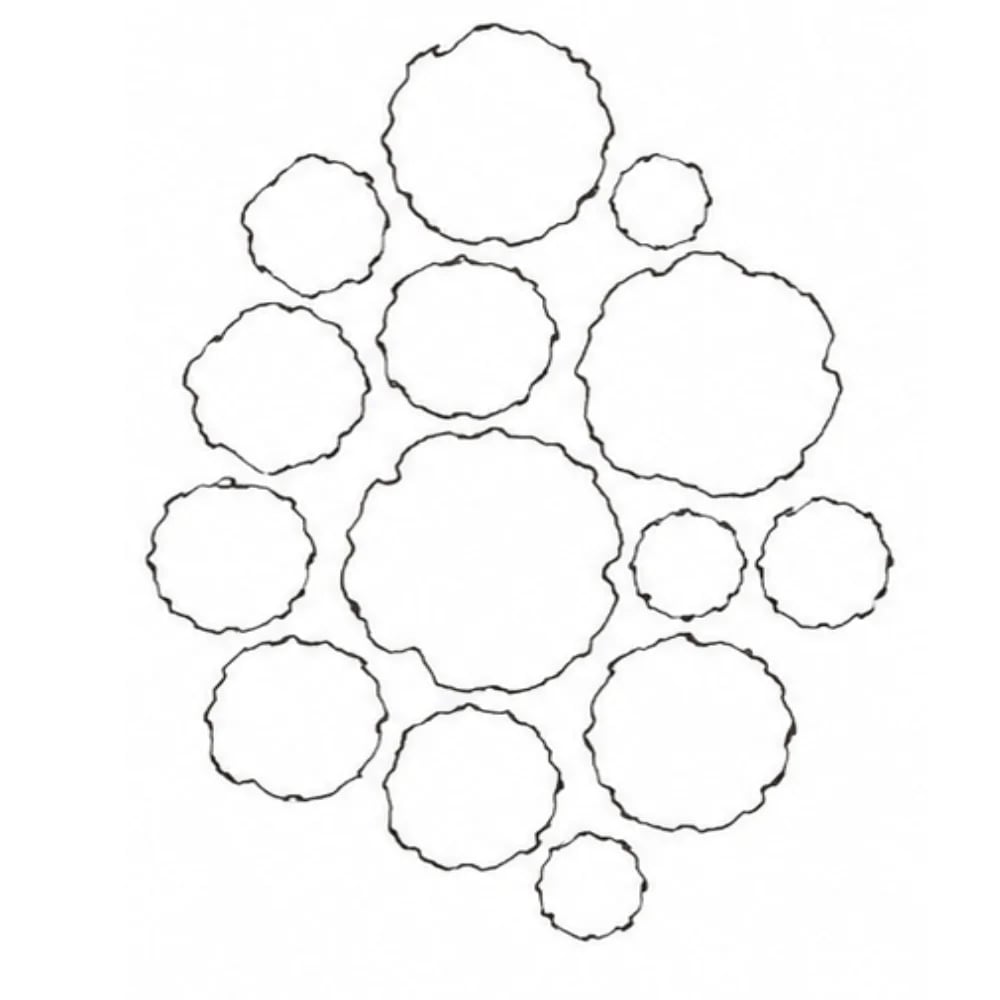
The most natural CLSTR arrangements are often organic. Not random — alive.
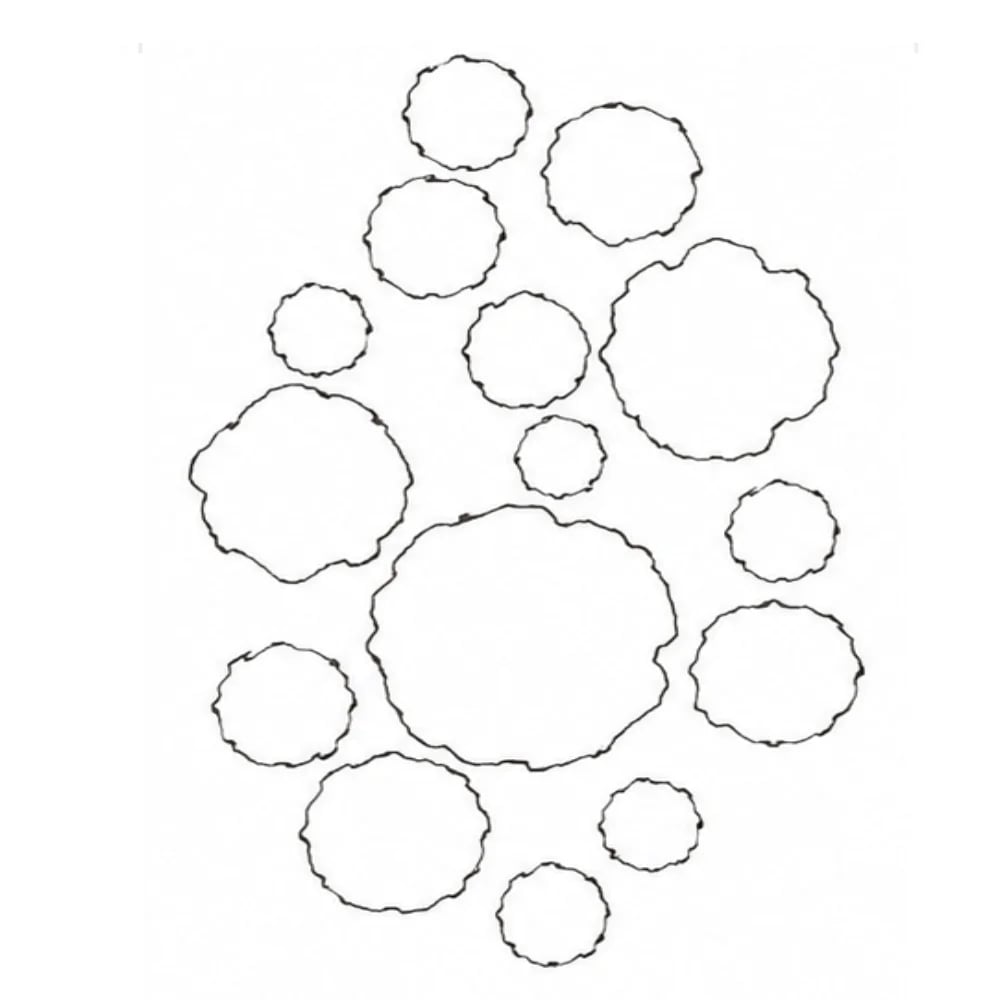
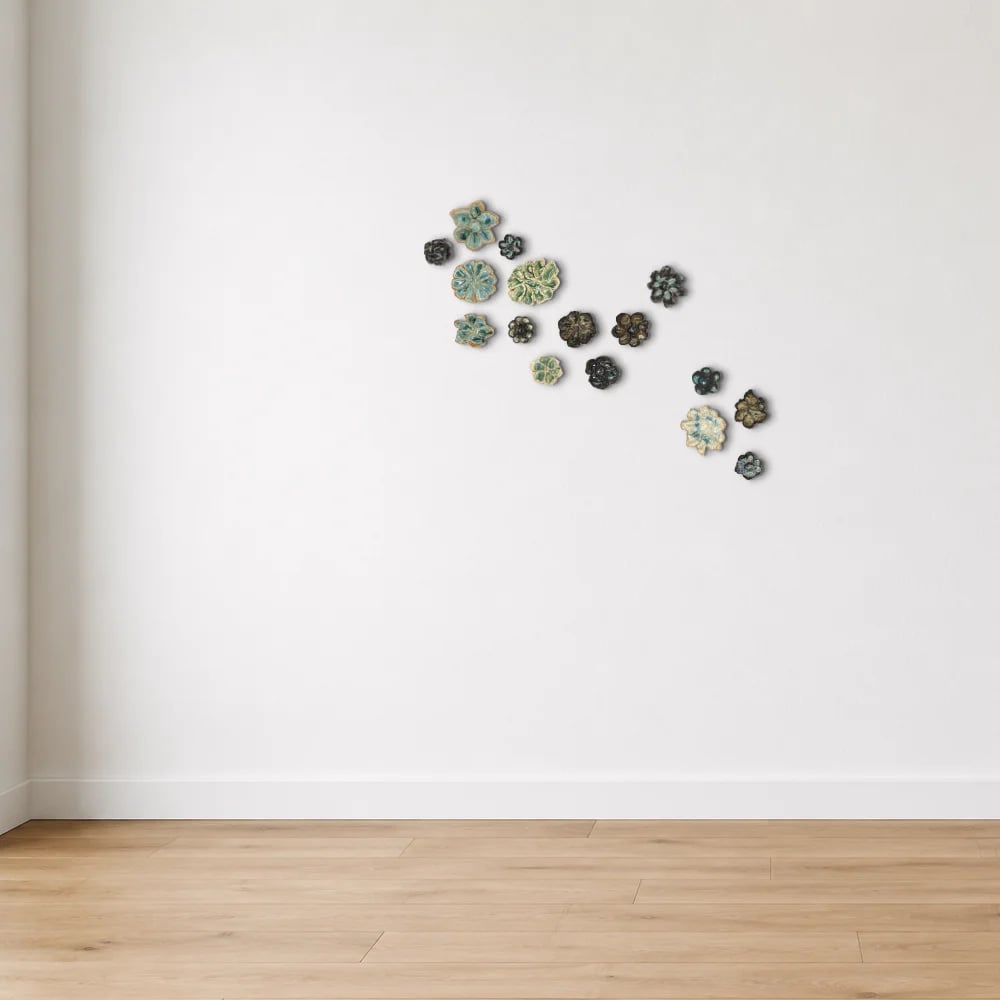
An organic composition grows outward from one or more anchor points. Larger fragments draw the eye first; smaller ones bring rhythm, detail and tension. Density and breathing alternate.
Up close you see individual objects. From farther back you read a single sculptural mass.
This is closest to:
* ex-voto walls * Wunderkammern * salon hangs * natural growth patterns * corals, moss fields, minerals
Planning the composition
The most common mistake with cluster walls is starting too quickly with nails or screws. A good installation begins on the floor.
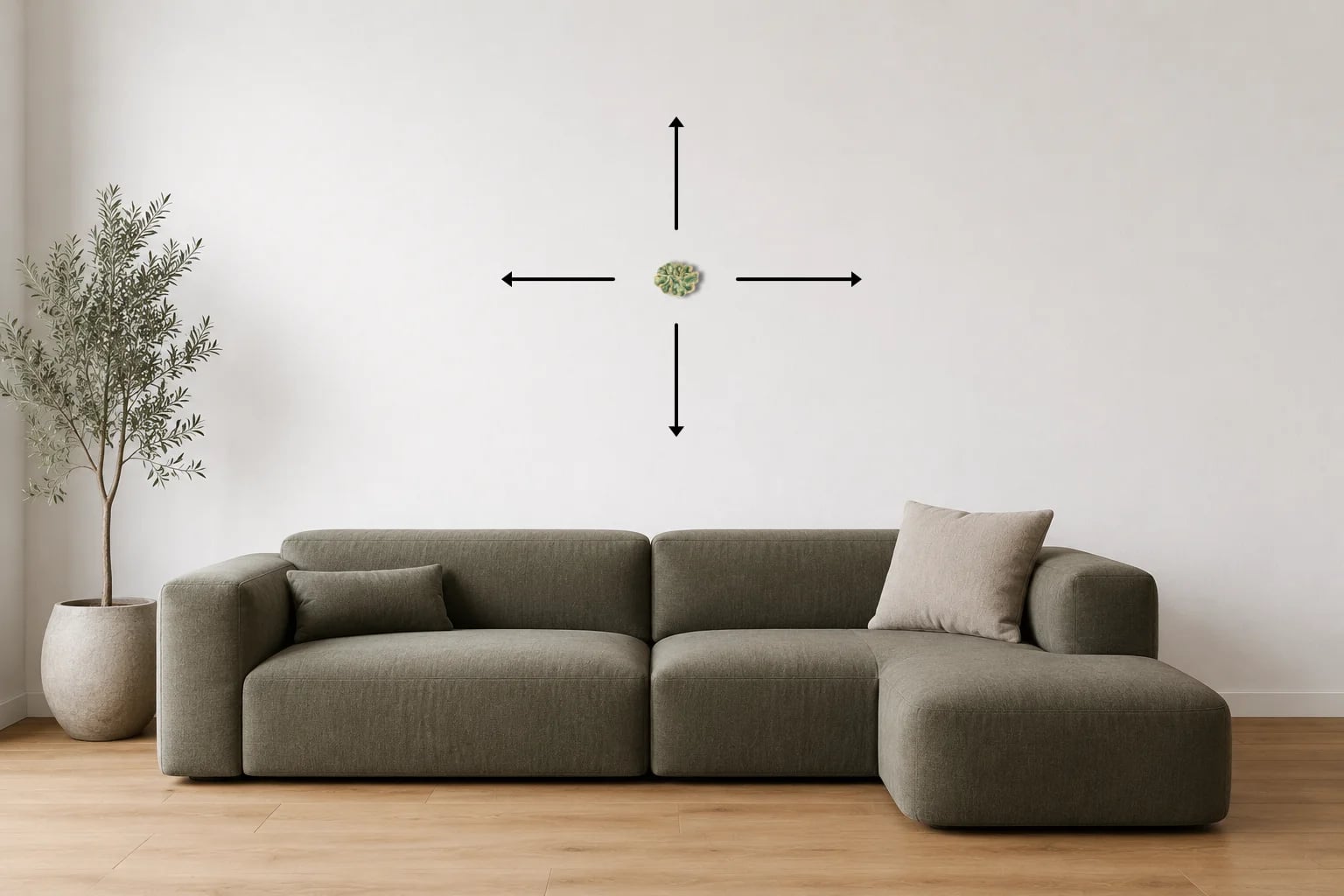
Choose one fragment or one patch as the starting point. It doesn't have to be the largest piece, but it should be the piece that sets the energy of the composition.
A CLSTR installation is never separate from the room. Look at:
* the wall colour * how light enters * shadows * materials around * the floor colour * the wood, steel, concrete or textile nearby
Dark fragments can deepen a light wall. White fragments can almost disappear into lime or plaster, becoming visible only through shadow.
Sometimes contrast works. Sometimes near-camouflage works.
Above a sofa, or across a whole wall
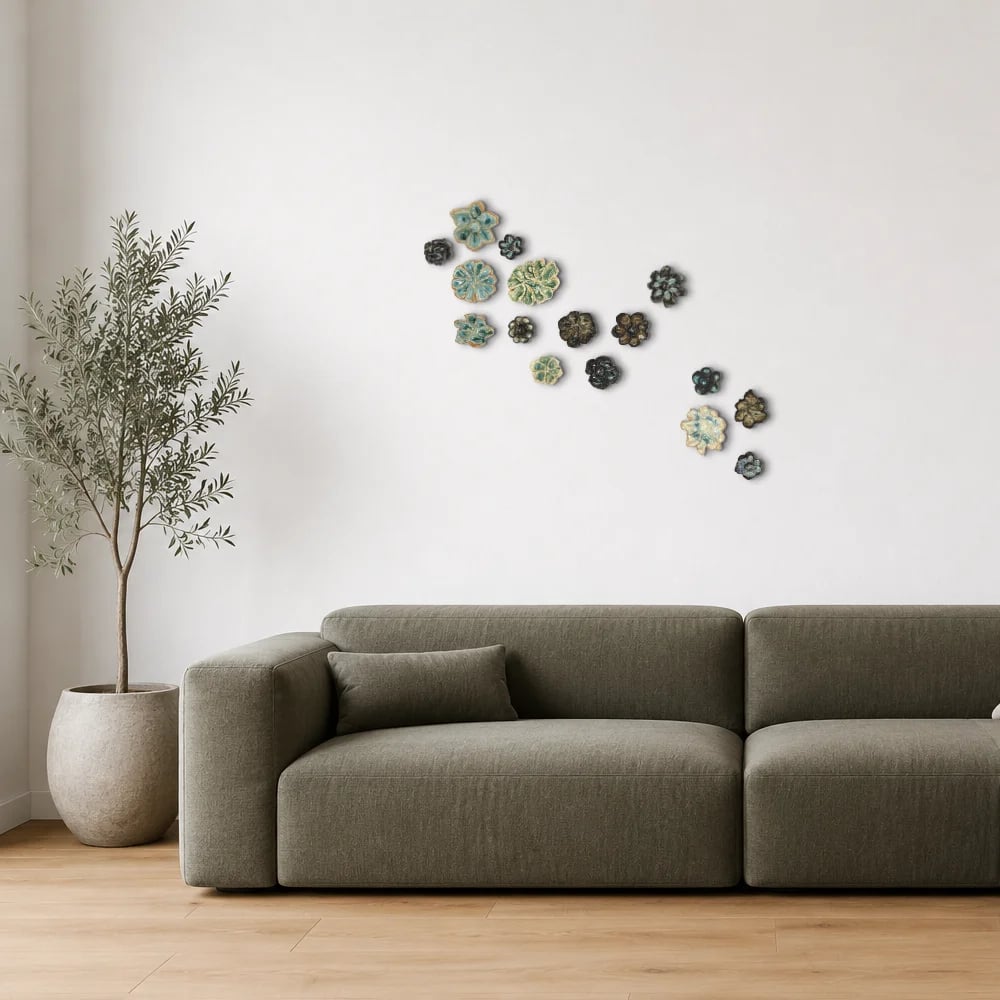
A clear horizontal tension works well here:
* keep the composition visually connected to the furniture * don't let the installation "float" * usually work wider than tall * leave enough breathing room around the outer edge
A patch above a sofa doesn't have to be perfectly centred. A slight asymmetry can give more tension.
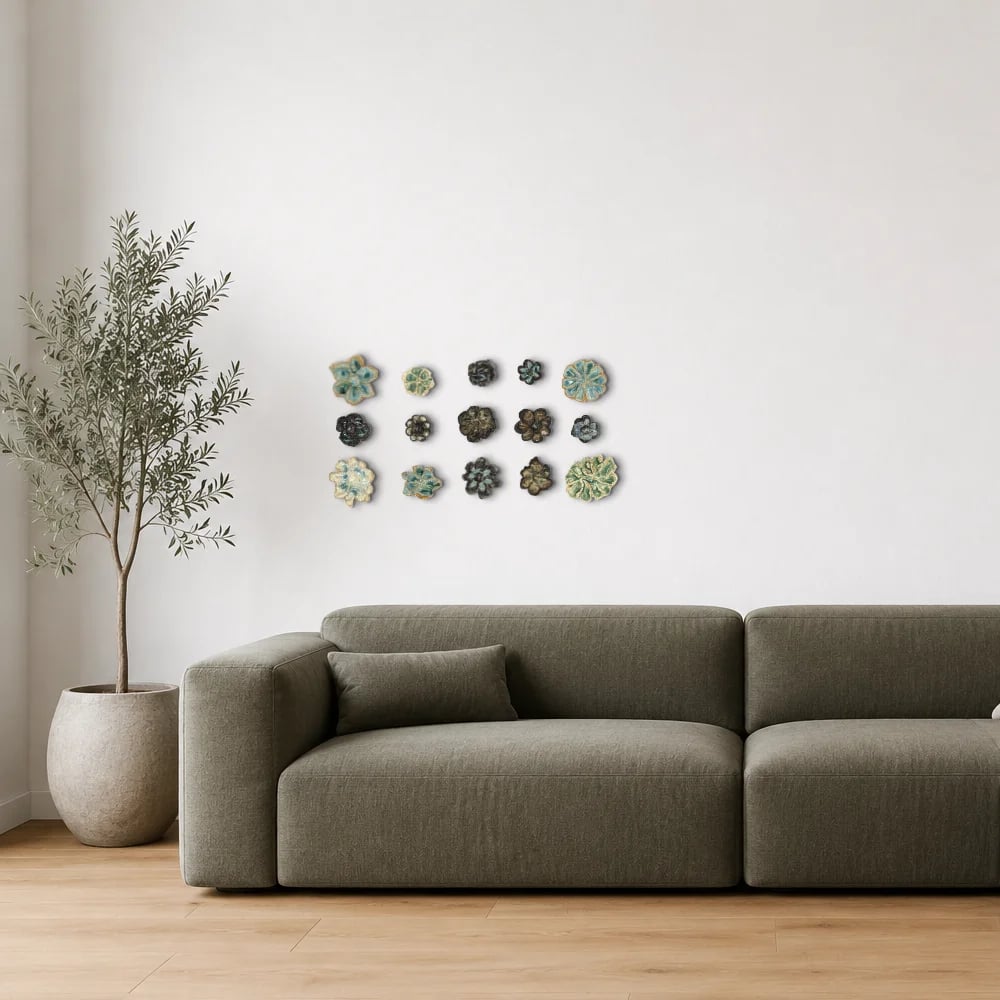
On a larger wall, the composition can grow like a field. This is closer to an installation:
* several clusters * areas of density * open stretches of wall between them * fragments that begin to function almost architecturally
A large CLSTR wall doesn't have to be finished in one go. The evolving quality is what makes it interesting.
To close
* Lay everything out on the floor first. * Photograph several compositions. * Start with fewer fragments than you think you need. * Density reads stronger when there is breathing room too. * Large pieces draw the eye; small pieces hold it. * Work from one focal point. * Account for shadows and evening light. * A cluster can grow over months. * Perfectly symmetrical is not always better. * Let the work stay a collection, not a catalogue pattern.
A good CLSTR installation doesn't feel "decorated". It feels gathered.
Inspiration
Every wall comes out differently. That's exactly the idea.